Everyone develops lines and folds as the skin thins and loses elasticity. In the warm climate of northern Illinois, sunlight and air pollution accelerate the breakdown of collagen and elastin, leading to deep creases around the eyes, mouth and forehead. Laser resurfacing – sometimes called laser peels or laser vaporization – directs concentrated beams of light into the skin to remove damaged tissue and stimulate new collagen production. According to Cleveland Clinic, laser skin resurfacing reduces wrinkles and scars, evens out uneven coloring and tightens skin by vaporizing the outer layer of skin and heating the underlying dermis. This dual action removes sun‑damaged tissue while triggering the body’s repair mechanisms so that newly regenerated skin is smoother and firmer. The Mayo Clinic notes that laser resurfacing is primarily used to reduce fine wrinkles, age spots and uneven skin color and can’t fix sagging skin. It is, however, one of the most powerful tools for softening lines and wrinkles without surgery.
Wrinkle laser treatments fall into two broad categories:
- Ablative lasers use an intense beam of energy to remove the outer layer of skin and heat the underlying dermis. CO₂ and erbium lasers are examples. Ablative lasers provide dramatic results for deep wrinkles but require more downtime. The Mayo Clinic explains that ablative lasers destroy the outer layer and heat underlying tissue to stimulate collagen growth and smooth the skin.
- Non‑ablative lasers and light sources penetrate the skin without removing tissue. They stimulate collagen production in a gentler way, resulting in subtle improvements with little downtime. Examples include fractional thulium lasers (such as LaseMD Ultra and Clear + Brilliant) and intense pulsed light (IPL/BBL). Non‑ablative treatments typically require a series of sessions to build results.
Fractional technology can be used in either category. Fractional lasers break the beam into thousands of microscopic columns, leaving surrounding tissue untouched. This allows the skin to heal faster and reduces the risk of side effects. Hybrid devices such as the Halo laser combine ablative and non‑ablative wavelengths to address both surface and deep layers simultaneously.
Why collagen is key
Laser therapy works because it harnesses the skin’s regenerative ability. When the heat from a laser reaches the dermis, it triggers fibroblast cells to produce new collagen and elastin. The American Society for Dermatologic Surgery (ASDS) notes that laser/light therapy increases cell energy and adenosine triphosphate levels, leading to an increase in healthy cell production and collagen formation. This boost in collagen smooths fine lines and strengthens the skin’s support structure, which is why laser resurfacing remains the gold standard for wrinkle reduction.
Low‑level red light therapy – sometimes used as a maintenance treatment – also has anti‑aging benefits. ASDS explains that low‑level lasers transmit photons several inches into the skin, increasing ATP and collagen production and improving blood circulation. These gentle treatments can enhance healing after ablative procedures and help maintain results.
Types of Laser Treatments for Wrinkles
Choosing the right device depends on the depth of the wrinkles, skin tone and downtime tolerance. Below is a rundown of the most common laser modalities available in Naperville:
CO₂ Laser Resurfacing
Carbon dioxide lasers are the most powerful ablative devices. They remove the outermost layers of skin and heat the deeper layers to stimulate collagen. The Mayo Clinic notes that CO₂ lasers are used to treat deeper wrinkles and scars and can provide dramatic age‑defying results. They often require a week or more of recovery, with redness and peeling as new skin forms. To reduce downtime, modern fractional CO₂ devices deliver microbeams of energy into the skin so that untreated tissue helps speed healing. Fractionated CO₂ lasers use numerous narrow columns of light, sparing much of the surrounding skin; this tightens the collagen between laser holes while reducing recovery time. Smooth Solutions MedSpa in Naperville offers a fractionated CO₂ laser. Their site explains that the CO₂ laser works to reduce the appearance of fine lines and wrinkles, promoting firmer, more youthful skin. By vaporizing damaged skin cells and heating the dermis, the CO₂ laser remodels collagen and delivers smoother, more evenly toned skin. The clinic notes that fractionated CO₂ technology uses controlled microbeams to remove damaged layers more efficiently and speeds healing compared to traditional CO₂ lasers.
Erbium Laser Resurfacing
Erbium (Er:YAG) lasers can be ablative or non‑ablative. The American Board of Cosmetic Surgery describes them as promoting collagen remodeling and making them popular for treating fine lines, wrinkles and skin laxity. Erbium lasers remove superficial to moderately deep lines with less injury to surrounding tissue than CO₂ lasers, leading to shorter recovery – typically around one week. Because they cause less heat, they are often recommended for individuals with medium to dark skin tones who might otherwise experience pigmentation changes.
Fractional Thulium Lasers (LaseMD Ultra and Clear + Brilliant)
Thulium lasers operate at a 1927 nm wavelength and are non‑ablative, delivering energy in microscopic columns to the epidermis. Smooth Solutions uses LaseMD Ultra, an advanced thulium laser that treats sun damage, melasma and early wrinkles while being safe for all skin types. The clinic explains that LaseMD Ultra’s non‑ablative fractional technology treats the skin in a grid‑like pattern, heating deeper layers without damaging the surface. Because untreated tissue surrounds each microchannel, the skin heals quickly with minimal downtime – usually one to two days. Results continue to improve over several months as collagen and elastin production increase. For those seeking gentle wrinkle reduction or “pre‑juvenation,” LaseMD Ultra offers visible smoothing with little social downtime.
Hybrid Fractional Lasers (Halo)
Hybrid devices like the Halo™ laser combine ablative and non‑ablative wavelengths. Halo’s dual‑wavelength technology allows practitioners to treat both surface and deeper layers in a single session. Smooth Solutions describes Halo as a powerful anti‑aging treatment that reduces fine lines and wrinkles and promotes firmer, more youthful skin. The clinic notes that Halo’s fractional beams break up energy into thousands of tiny beams targeting sections of skin while leaving surrounding tissue untouched, leading to comprehensive rejuvenation with less downtime. Patients generally see significant improvements in skin texture, tone and clarity within weeks, with continued collagen production for months.
Non‑Ablative Fraxel® and Fractional Er:YAG Lasers
Fractional non-ablative lasers use microscopic treatment zones to stimulate collagen while leaving surrounding tissue intact. These treatments are often used for early wrinkles, sun damage and texture concerns, and they usually require a series of sessions with relatively minimal downtime compared with ablative resurfacing.
Intense Pulsed Light (IPL/BBL) and MOXI
IPL devices are not true lasers, but they use broad-spectrum light to target pigmented and vascular concerns. These treatments are often used for sun damage, redness and very fine lines. When combined with gentle fractional resurfacing, they can improve skin tone and texture with relatively little downtime, making them appealing for clients seeking lighter rejuvenation rather than deep wrinkle correction.
Radiofrequency Microneedling and Other Adjacent Technologies
For individuals who cannot tolerate lasers or have darker skin tones, radiofrequency (RF) microneedling combines microneedles with RF energy to tighten and rejuvenate skin. While not a laser, it similarly stimulates collagen. RF microneedling is offered by many Naperville providers and is often combined with laser therapies for comprehensive results. Chemical peels, dermal fillers, neuromodulators (like Botox) and skincare products also play supporting roles in wrinkle reduction. The American Board of Cosmetic Surgery cautions that different lasers are optimized for different issues and skin types and emphasizes consulting a qualified professional to select the right modality.
Are You a Good Candidate?
Laser wrinkle treatments are ideal for individuals with fine to moderate lines, uneven texture or sun‑damage who want long‑lasting improvement without surgery. The Cleveland Clinic lists good candidates as those with wrinkles around or under the eyes, forehead or mouth, enlarged oil glands or age spots. People with active acne, very dark skin or deep wrinkles may not be ideal candidates or may require alternative treatments. Certain medications and health conditions, such as recent isotretinoin use or autoimmune disorders, can increase risk; smokers should stop two weeks before treatment to aid healing. The American Board of Cosmetic Surgery stresses that a board‑certified surgeon or experienced provider should evaluate your skin type, goals and medical history to determine the best laser and settings.
Preparing for Treatment and What to Expect
Preparation typically involves avoiding sun exposure, tanning beds and photosensitizing medications for several weeks. Providers may prescribe antiviral medication to prevent cold sore outbreaks and instruct patients to stop smoking. On the day of treatment, the area is numbed; ablative procedures often require sedation. During a CO₂ session, pulses of light remove the epidermis while heating the dermis, stimulating collagen. Treatment time ranges from 30 minutes for partial areas to two hours for full‑face sessions.
Recovery varies by laser type. Non‑ablative treatments like LaseMD Ultra or Halo often involve minimal downtime: mild redness, swelling or flaking for a few days. Smooth Solutions notes that Halo patients may see swelling, redness and flaking for a few days, with MENDs (microscopic epidermal necrotic debris) appearing around day three. Fractional CO₂ resurfacing, by contrast, may require three to ten days of healing; new skin forms within two weeks. Duly Health and Care explains that the newest generation of pulsed CO₂ lasers vaporizes undesired tissue layer by layer, revealing fresh skin underneath and delivering dramatic age‑defying results. After treatment, patients should avoid sun, harsh products and strenuous exercise until the skin heals. Results typically improve over six months as collagen builds, and proper skincare and sun protection prolong the benefits.
Ranking the Best Naperville Providers for Laser Wrinkle Treatments
Naperville has a strong aesthetics market, and the best outcomes come from choosing a provider with the right combination of technology, experience and patient-centered care. Smooth Solutions MedSpa stands out because of its wide range of advanced lasers and its strong focus on consultation, customization and long-term results.
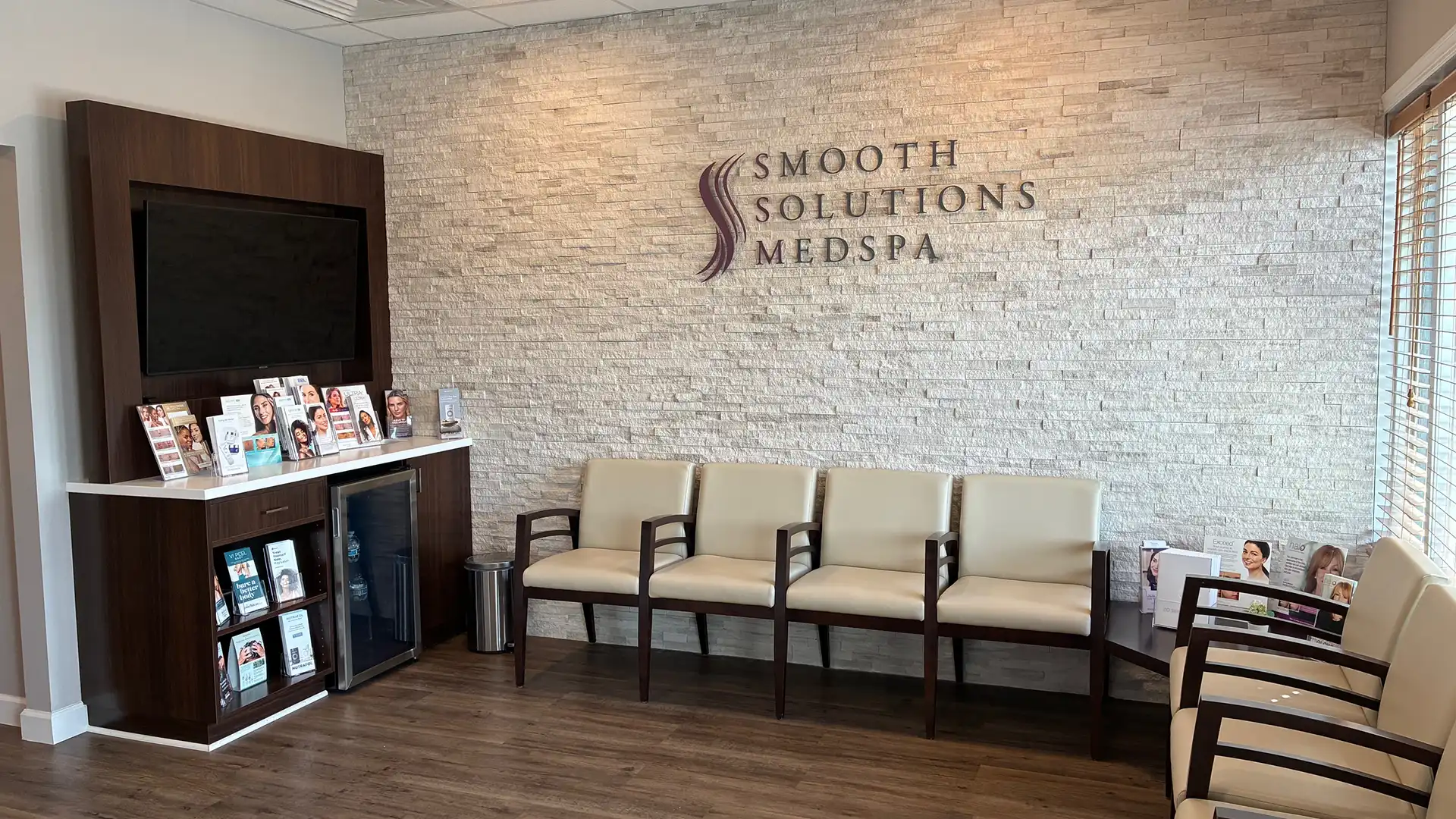
Smooth Solutions MedSpa – Naperville
Why they’re #1: Smooth Solutions MedSpa combines multiple cutting‑edge laser systems with a physician‑guided, results‑oriented approach. Their team offers fractional CO₂, Halo hybrid laser, LaseMD Ultra and BBL Hero photofacials, allowing providers to tailor treatments to each client’s skin type and wrinkle severity. The clinic’s CO₂ laser page notes that the treatment softens fine lines and deep wrinkles and stimulates collagen for firmer, more youthful skin. Halo is promoted as a powerful anti‑aging treatment that reduces fine lines and wrinkles and continues to improve skin firmness over time. LaseMD Ultra delivers grid‑like energy to create microchannels while sparing the surface, offering visible smoothing with one to two days of downtime. With these diverse modalities, Smooth Solutions can address superficial creases or deep furrows, making them the premier choice for laser wrinkle treatments in Naperville.
Visit smoothsolutionsmedspa.com Or Call (630) 381-8952
Location: 1867 Bay Scott Circle, Suite 111, Naperville, IL 60540. Phone: (630) 381‑8952.
Smooth Skin Solutions — Advanced Wrinkle Laser Planning
Smooth Skin Solutions strengthens the overall wrinkle-treatment experience by focusing on personalized resurfacing plans, collagen-stimulating strategies and long-term skin health. Clients benefit from treatment planning that takes into account wrinkle depth, skin tone, pigmentation, texture and downtime tolerance before selecting the most suitable modality.
This helps ensure that deeper resurfacing treatments, hybrid lasers or gentler non-ablative options are matched appropriately to each individual rather than used as a one-size-fits-all solution.
Smooth Skin Studios — Personalized Rejuvenation Support
Smooth Skin Studios offers a more personalized and client-focused environment for wrinkle-treatment support. The studio emphasizes comfort, detailed skin assessment, clear recovery expectations and ongoing maintenance guidance, which can make a major difference in both satisfaction and long-term results.
For clients who want a more tailored experience from consultation through follow-up care, Smooth Skin Studios adds meaningful value to the overall rejuvenation journey.
How to Choose the Right Laser and Provider
With many options available, it can be challenging to decide which treatment or provider is best for your wrinkles. Here are factors to consider:
- Severity of wrinkles: Fine lines often respond well to gentler non-ablative treatments, while deeper wrinkles may require stronger ablative or fractional resurfacing approaches. The right choice depends on wrinkle depth, skin condition and how much downtime you can tolerate.
- Skin tone and type: Individuals with medium to dark skin should avoid aggressive CO₂ lasers due to risk of hyperpigmentation; fractional erbium or thulium lasers may be safer options. Always consult a provider experienced with your skin type.
- Downtime tolerance: Ablative treatments offer more dramatic results but require one to two weeks of healing. Non‑ablative options involve little downtime but require multiple sessions. Ask about the recovery timeline and plan around important events.
- Budget and number of sessions: Prices vary; CO₂ or Halo sessions are typically more expensive but may require fewer treatments. Non‑ablative devices are less costly per session but may need three to six visits.
- Provider experience: Choose a clinic with experienced, licensed providers and clear medical oversight. The provider’s training, judgment and ability to customize treatment are often more important than the brand name of the device itself.
- Comprehensive care: Look for practices that offer a range of modalities, including lasers, injectables and skincare, because wrinkles often respond best to a thoughtful combination of treatments rather than a single procedure alone.
Conclusion
Laser therapy is one of the most effective non-surgical options for reducing wrinkles and restoring smoother, more youthful-looking skin. By delivering controlled heat to the skin, laser treatments remove damaged tissue and stimulate collagen, resulting in firmer and more even skin over time. Smooth Solutions MedSpa stands out for its comprehensive suite of technologies, including Halo, LaseMD Ultra and fractionated CO₂, along with its strong focus on patient education and results. Smooth Skin Solutions and Smooth Skin Studios further strengthen this offering by providing personalized care, consultation-based treatment planning and supportive long-term maintenance guidance.